
Abundance
The Art of Seeing the Living World Differently

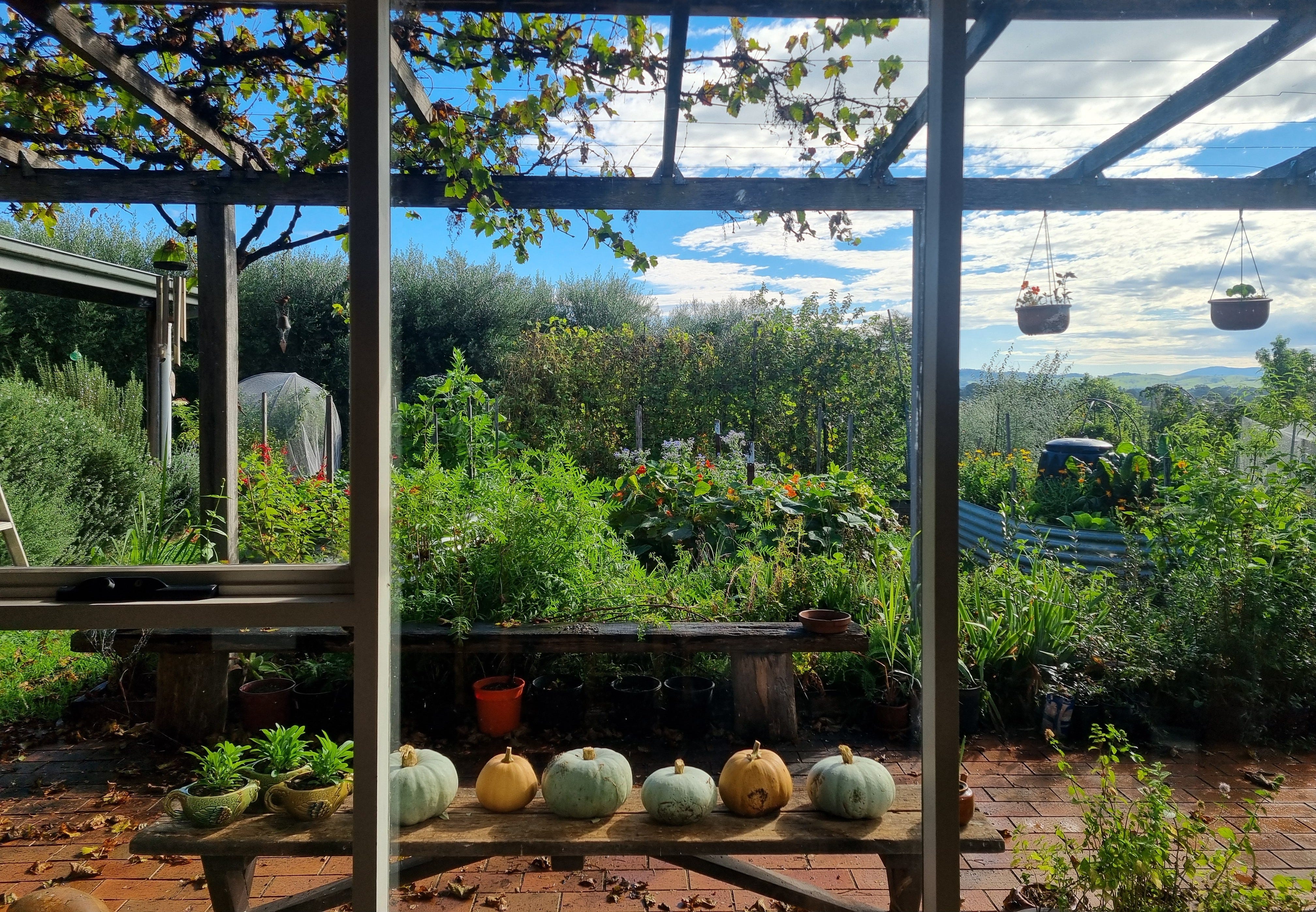
The view from my kitchen window this Autumn.
Over the last six years I have come to see the land I live on and the plants it produces differently than before. What I see now are all the edible and useful plants not just the ones we plant and tend.
Through the window frame above you can see lots of obvious edible plants - strawberries, sweet potatoes, lettuce, shallots, pumpkins, runner beans, yacon, apple trees, olive trees, persimmon tree, goji berries, silverbeet/Swiss chard, raspberries, tomatillos.
But what about all the other things like the herbs we use for seasonings, teas, pest control and medicine? There’s rosemary, elder, tansy, borage, lemon verbena, a few mint varieties, lemon balm, nasturtiums, thyme, oregano, marjoram, yarrow, wormwood, calendula, Sweet Annie, lavender, pineapple sage, savory, lemongrass, garlic chives, Echinacea.
And the useful weeds? Dandelion, mallow, plantain, chickweed, shepherd’s purse.
And the plants for making things like baskets or natural dyes? Iris, grape vines, pumpkin vines, dandelions, butterfly bush, marigolds, zinnias, yarrow, rosemary, eucalypts, myrtles, iris, elderberry.
And the things in pots? Olive tree saplings and acorns that have recently been sown.
These are just the plants in the photo. What this list would look like if it incorporated the entire property….
Cherry, apricot, plum, nectarine, quince, pear, carob, hazelnut, chestnut, nashi and eight other varieties of apple trees, blueberries, citrus - lemons, lemonade, various orange varieties, grapefruit, rhubarb, feijoas, asparagus, many varieties of tomatoes, chilies, arugula/rocket, basil, capsicum, potatoes, turmeric, spinach, parsley, hollyhocks, New Zealand Flax, stinging nettle, fat hen, wild lettuce, eggplant. I’m sure there’s more, but my brain hurts now!
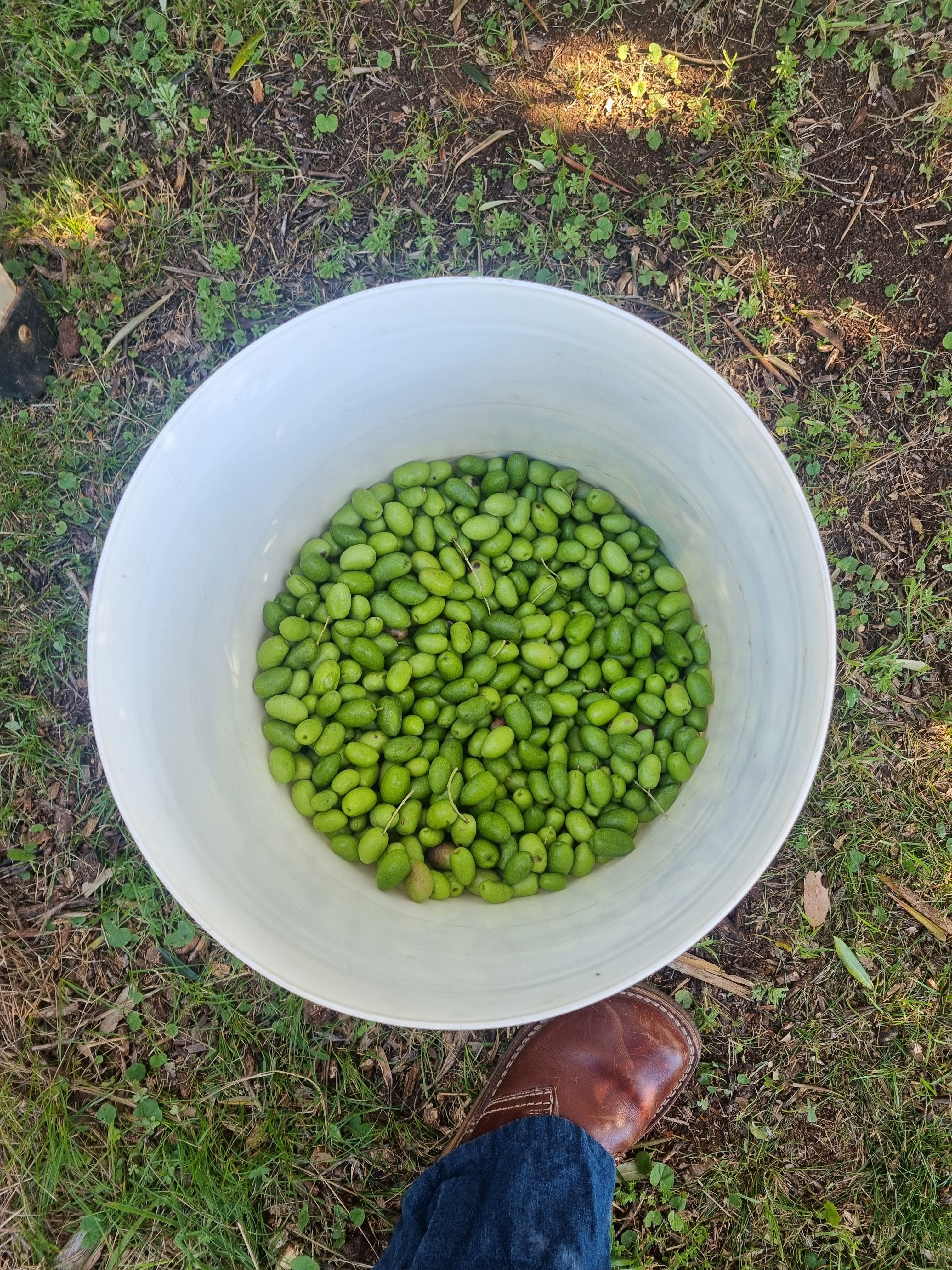
Yesterday we olive-harvesting day here.
My point here is that we need to start to see the world around us with different eyes; we need to find the usefulness in all that is living. When my daughter was young we used to go for walks around the creek in the middle of our village and she would ask me about all the plants we passed…primrose, cat tails/rush, heal-all, mullein, mushrooms, acorns, everything she saw that was new to her. If I knew the answer, I would tell her and if I didn’t I would look it up. In this way she had an introduction to the usefulness of the world around her and how she could interact with it in different ways. She could feel part of the world, instead of feeling separate from it, afraid of its strangeness and the unknown.
I hope, now as an adult, she can still see Creation and all that it has to offer us. My belief is that Creation holds everything we need if we just know where to look.
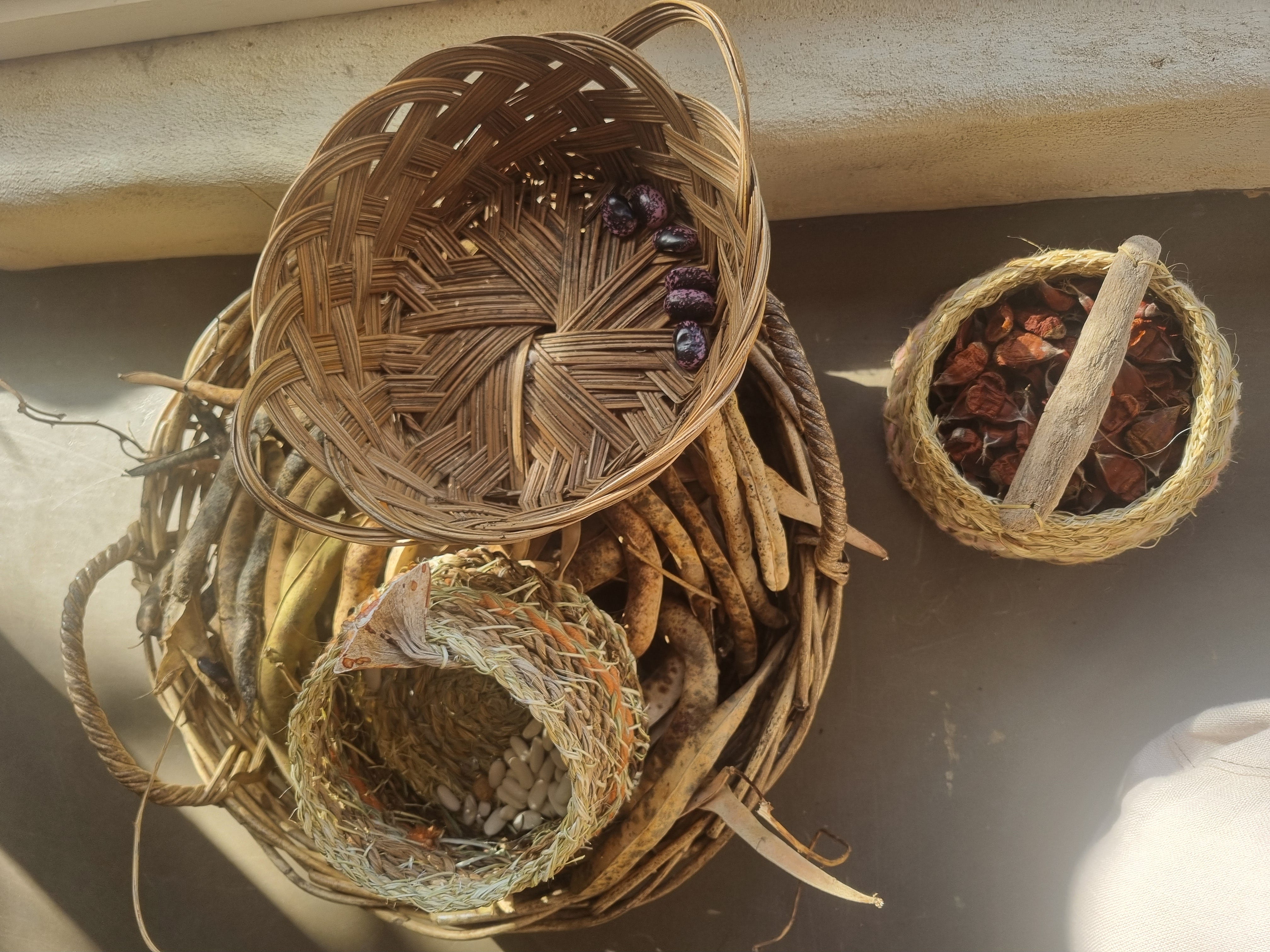
Scarlet Runner Beans and White Beans ready for my grandson to shell - a very good pastime for a busy two-year-old, and foraged chestnuts for the dyebath. The two smaller baskets are hand-made from New Zealand Flax leaves and other local materials.
When I go outside with basket in hand to harvest what is available that day, it is amazing the amount and variety I come back with. Sometimes it’s a large basket of fruit to process, sometimes it’s fiber to make into twine or baskets, sometimes it’s a small amount of medicinal herbs to store for when they are needed or dyestuff to color wool. There is always something useful to collect. Or at least something to note for future harvesting (everyone should have a map in their head of their local foraging area!). This way I keep our coffers full.
Variety is also important to health. The greater the diversity in the foods you consume, the greater the variation in nutrients. And, over time, you will have a large collection of foods to consume in various ways. This is the gift of abundance that is all around us.
Part of the work involved in collecting, growing, harvesting, preserving and preparing your own food is being clever and curious, part is physical labor, part is trial and error. But it’s work, none the less. There’s no getting around it. Above all, though, the results are worth the work and time.
Many people are worried about what the future will hold - whether or not we will have enough fuel, fertilizer, food on grocery shelves, camaraderie and trust between neighbours. My advice is to start to look at the world around you through different eyes; to start to see the abundance - not just the abundance of foodstuff, but the abundance of charity and humanity, too.


